
My body and mind told different stories
This week, we’re dropping back into deep listening and learning more about the why. And this has been a great reminder for me. My oldest daughter is in Spain not too far from the wildfires and while I “understand” that she is safe and sound, my body is tensing and resisting that knowledge. It’s been helpful to pay closer attention to those physical sensations and notice how when I override them, I can wind up defaulting to the mind, letting stories take over that are not based on truth. As I come back to the tension and layer it with deep breaths and tenderness (enter nervous system regulation and self-compassion), I’m able to soothe that anxiety and return to the truth of the moment.
I’m reminded that one of the best ways to lower anxiety is to practice interoception; the skill of paying attention to the sensations in your body. We're back to deep listening — spiraling deeper this time.
This simple practice of shifting your awareness from your mind to your body can calm your nervous system and reduce ruminating thoughts and anxiety. It also strengthens a part of your brain called the insula which is the center of the mind/body/brain connection.
This center shares information about our sensations and emotions with the decision making areas of the brain so that we can respond to the moment at hand with both our physical and emotional bodies in mind.
The insula is also the center of the brain that governs empathy and self-agency, facilitating both deep connections as well as a greater sense of personal power.
When we experience trauma or chronic stress, we often check out of the body. That checking out happens because these experiences often cause physical and emotional discomfort and so our response is to get out of there.
The problem is that over time, checking out leads to a disconnect between the mind and body. They start operating on different planes, oftentimes in conflict versus cooperation. And the result is a diminished sense of self.
When we practice interoception we build that sense of self. We’re more able to respond to the needs of the body and we build that mind/body bridge. We up the trust between the two and we encourage the mind to stop bossing around the body.
Let’s link this back to nervous system regulation and self-compassion.
When I’m practicing yoga, I can push myself to do something that isn’t appropriate for my body or not challenge myself to do something that is totally within my wheelhouse. That’s because my mind is running the show. It’s telling my body what it can and can’t do based on past experiences or old assumptions about who I am and how strong or weak I am. But if I can practice paying attention to the bodily feedback I’m getting - the sensations in the body, my heart rate, my energy - then I can make in-the-moment decisions in my practice and move more intuitively. When I move in this way, the result is always more satisfying.
I calm my nervous system because I’m taking diaphragmatic breaths without tensing or guarding, and I’m not telling stories about what I can and can’t do.
I up my self-compassion because I’m not beating myself up for doing or not doing what my mind has prescribed. Instead I’m following the physical cues of my body with curiosity versus judgment.
And I build the skill of deep listening, which again, supports the mind/body relationship.
You can do this from a seat or in any movement practice. In fact, I recently told a student that I should probably call myself an intuitive movement teacher versus a yoga instructor. Yes, I’m always teaching yoga postures, but what I’m teaching is how to find your way into those postures in a way that feels right for your body, not mine.
So whether you are in seated meditation, yoga, pilates or climbing a mountain, you can still notice how your body feels, how you might move in ways that feel more satisfying and how you would direct your mind in ways that are in service to your body.
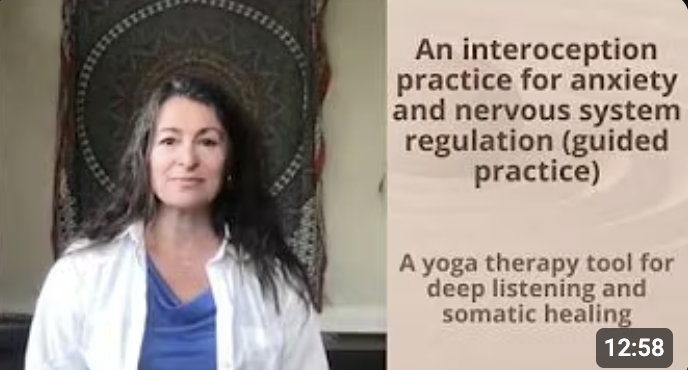
In the video below, I’ll talk a bit and then share a practice you can do anywhere. If you’d like to try it with me, click the link below.
This fall, I'll be offering another round of both the Somatic Immersion and the Somatic Immersion companion training (a facilitation training for wellness professionals). In both experiences we'll use discussion, meditation, breathwork, asana, and reflection to explore the spiral together.
Put your name on the waitlists and you'll be the first to know when registration opens in September!
Stay tuned for more of the 5 pillars. Next up, a deeper dive into somatic parts work.
Thanks for reading, watching and being a part of this community. I hope our paths cross soon.
And as always, I'd love to hear from you. Did you learn anything new as you moved this week? Hit reply - I'd love to know!
Sending so much love,
Rachel