
The Power of Imagination: Deep Imagery and Yoga Therapy
Nature rocks!!! I just spent 7 days camping, hiking and stand up paddle boarding in Utah, Idaho and Wyoming. While SUPing, I saw ospreys hunting for fish and delivering them to babies in their nest (including an amazing osprey plunge followed by a bald eagle trying to steal the catch). While hiking to a stunning alpine lake, I saw a moose munching away, and watched a pair of sandhill cranes grazing in a meadow from the comfort of my camp chair.
It was a wildlife extravaganza and the absolute antidote for a life full of news that leaves me grieving and worried and wondering what to do about it all.
And yes, I believe that I have a role to play in the state of the world and I absolutely want to be part of the solution. But sometimes that requires a pause. Whether that pause is 2 minutes of mindful breathing or 7 days in the wilderness, the pause is essential.
We simply cannot move at the pace of the world all the time and expect to stay sane and regulated and engaged.
Staying engaged in the world, requires moments of stillness, moments to gather ourselves and maybe most importantly, moments of inspiration. And for me at least, nature is an essential place to receive that inspiration.
Spending time in nature is one of the best ways to regulate your nervous system.
It offers perspective - widening our view of what is happening in the world to include beauty, harmony, and awe. And it helps us to move more deeply inside of ourselves. Without the distraction of screens and responsibilities, we have a moment to catch our breath and notice what's happening inside. Our imagination is amplified because we have more space to "tune in".
Which brings me to the 5th pillar in my yoga therapy framework: Deep imagery.
Deep imagery - originally coined active imagination by Carl Jung - is a way to bridge the conscious and the unconscious. It's a way to be in conversation with the parts of your psyche that have information to share with you. It's a way for your psyche to speak when it doesn't yet have words. Deep imagery is a language - a language we can learn to use in order to know ourselves more deeply.
A place I like to start is a callback to the 1st pillar in the framework: nervous system regulation. Deep imagery is one of the most underused tools in regulation and it's one of my favorites. We can use it to cultivate an inner sense of safety when the world around us is feeling overwhelming.
Remember, healing and growth can't happen when we are dysregulated or out of our "window of tolerance". And while we can use the language of imagery to deepen the conversation between different parts of ourselves (like last week's email demonstrated), we can also use it to make our way back to that window of tolerance.
Here's an example: When I'm having a stressful day, one stressor builds upon the next. I'm not in any danger but my nervous system, already close to the edge of that window of tolerance, eventually starts to perceive those stressors as threats - even little ones like being a few minutes late. These are the moments when we need to self-soothe.
In the last few emails, you've heard me talk about breathing, bringing in more self-friendliness, paying attention to the sensations in your body, and talking to the parts of you that feel afraid. Imagery is yet another tool.
Try this when you're feeling close to your edge or simply wanting to bring in a little more ease (right now might be the perfect opportunity).
Take a few breaths and invite your physical body to relax.
Notice the places that are braced and try to offer them a little extra support - drop more fully into your chair and feel your legs and hips get heavier.
Bring to mind a place that makes you feel comfortable and safe. This could be your favorite cozy chair or a place in nature that nourishes you.
Now really imagine it. Call up the images and colors and textures and smells and sounds. Use your senses to bring this place alive in your imagination.
And the most important part. Try to really feel yourself there. Notice if you're body is more relaxed. Notice if your breathing feels more settled and expansive. Notice if your mood has shifted or if you feel less stressed, less anxious or fearful.
You've just created a refuge - a place inside of yourself where you can cultivate safety using your imagination. This is just one form of deep imagery (more to come)!
If you'd like to hear a little more about deep imagery and explore a guided meditation, check out my latest video below.
And if you're thinking of joining my fall Somatic Immersion, get your name on the waitlist and you'll be the first to know when registration opens in September!
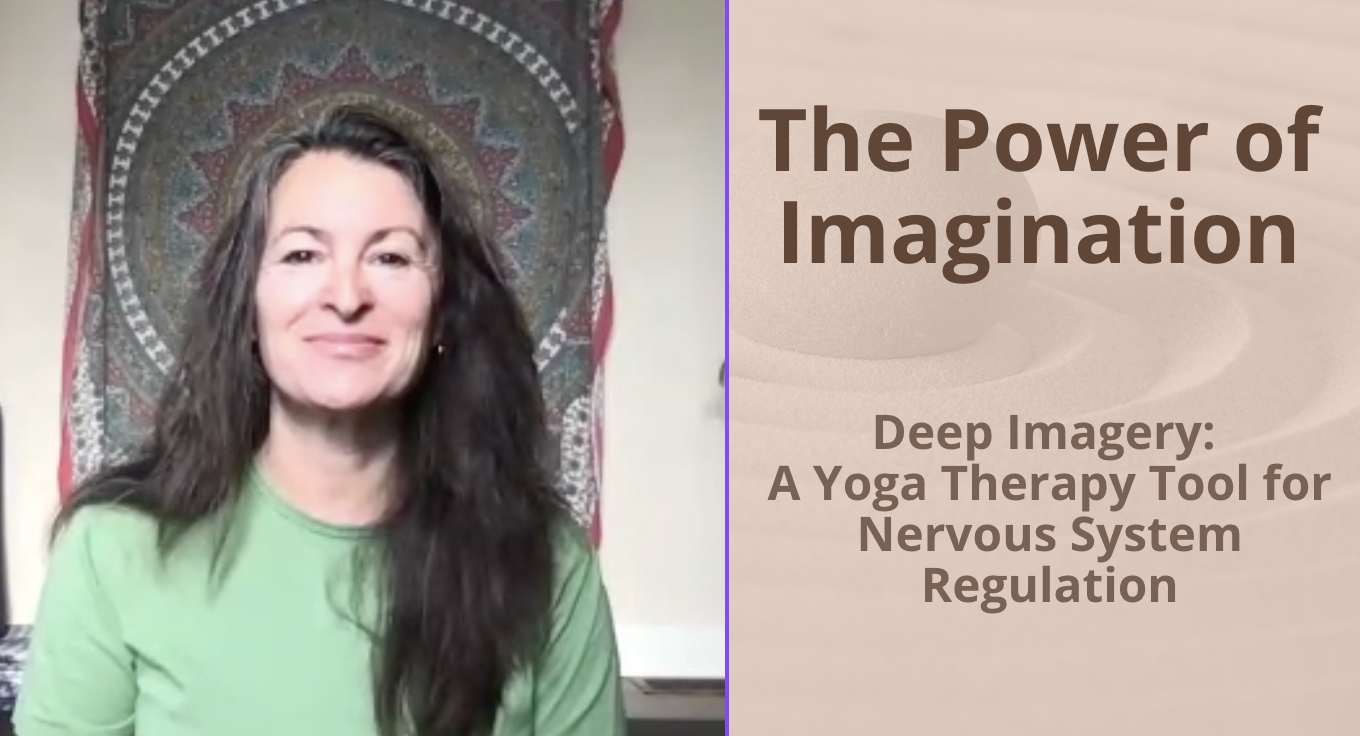
Stay tuned for more of the 5 pillars! Next week we'll return to nervous system regulation and dive a little deeper.
Thanks for reading, watching and being a part of this community. I hope our paths cross soon.
And as always, I'd love to hear from you. Where did your imagination take you?
Sending so much love,
Rachel
Ways to work with me...
Yoga Therapy Sessions, Courses and Trainings
Work with me one-on-one. I offer yoga therapy, yoga instruction and personal and professional mentoring. Reply to this email if you'd like to chat about whether this is the right time and fit for you.
The next Somatic Immersion Yoga Therapy Journey starts in September. Join the waitlist and be the first to know when registration opens.
The next Somatic Immersion Yoga Therapy Training for facilitators begins in September. Join the waitlist and be the first to know when registration opens.
Spain Retreat
Yoga + Nature + Culture, Retreat to Southern Spain, March 14-20, 2027. Register now to save your spot - space is limited.
Yoga, Meditation and Mindfulness Classes
If you like practicing online, join the Your Yoga community! We meet on zoom for yoga and meditation 4 times a week and you'll have access to 100's of recorded classes in the Your Yoga library. Register here to start your free 7-day trial.
And if you prefer self-study, choose from a variety of pre-recorded mindfulness workshops and courses and explore at your own pace.